Crafts in Rhineland-Palatinate for reducing bureaucracy and promoting diversity
March 19, 2024
Topics such as the energy transition, European elections, and the shortage of skilled workers were on the agenda at the summit of the Rhineland-Palatinate skilled trades. In two resolutions, representatives advocated for reducing bureaucracy and promoting a cosmopolitan skilled trades sector.
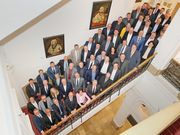
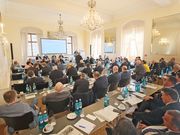
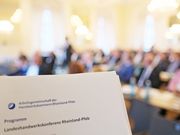
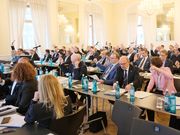
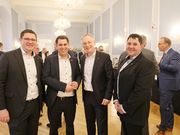
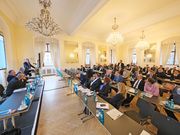
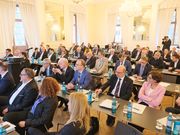
Exchange and dialogue – these were the key words of the Rhineland-Palatinate State Crafts Conference held in mid-March in the Hall of Mirrors of the Electoral Palace in Mainz. Representatives of the Rhineland-Palatinate crafts sector – the Association of Chambers of Crafts Rhineland-Palatinate, the Entrepreneurs' Association of Crafts Rhineland-Palatinate, and the State Association of District Crafts Associations in Rhineland-Palatinate – gathered for an intensive exchange.
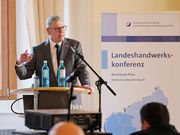
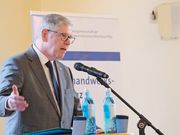
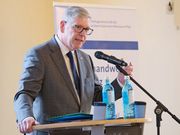
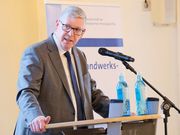
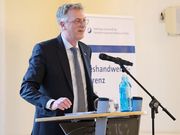
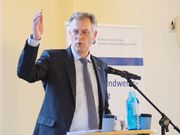
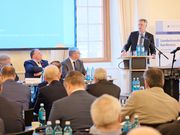
The agenda for the leading representatives of the state's skilled trades included topics such as bureaucracy, the European elections, the energy transition, and diversity within the skilled trades, as well as a keynote address by Dirk Palige , Managing Director of the German Confederation of Skilled Crafts (ZDH) , who provided firsthand information on political developments in Berlin. Furthermore, the conference participants sent an important signal by using the umbrella brand "Handwerk RLP" (Skilled Trades Rhineland-Palatinate). The skilled trades organizations in the state speak with one voice and advocate for the overall interests of the skilled trades. "This uniformity in sending messages is the foundation of credibility. Opinion formation, in turn, must take place through open exchange and at conferences like this one. This is the basis for asserting our interests," Kurt Krautscheid, spokesperson for the Association of Chambers of Skilled Crafts, emphasized in his welcoming address.
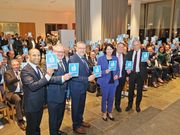
With two unanimously adopted resolutions, the Rhineland-Palatinate State Crafts Conference demonstrated impressive unity. In the resolution "Time to make a change: Reduce bureaucracy now," the state crafts sector calls on politicians in Rhineland-Palatinate, as well as in Berlin, to free small and medium-sized enterprises (SMEs) from the stranglehold of bureaucracy. "For three out of four craft businesses, constant adjustments to new regulations are the biggest burden in their daily operations, followed by verification and documentation requirements, which 54 percent of all craft businesses find burdensome," explained Axel Bettendorf , Managing Director of the Trier Chamber of Skilled Crafts and Trades and Managing Director of the Association of the Four Chambers of Skilled Crafts.
The result: Self-employment is becoming increasingly unattractive, so much so that currently one-third of master craftsman course graduates are already shying away from starting their own business due to the bureaucratic burden. The State Conference of Skilled Crafts is calling for, among other things, the digitalization of administration, reliable processing times for applications, a "one in, two out" rule (for every new regulation, two old ones are deleted), and a bureaucracy pilot who will coordinate regulations between the authorities, ensuring a single point of contact for the company.
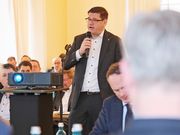
Dr. Martin Hummrich,Head of the SME and Innovation Department at the Rhineland-Palatinate Ministry of Economic Affairs, admitted in his welcoming address that bureaucracy had reached an excess and that "Germany had slowed itself down." He justified the bureaucracy by citing the need for greater security in times of uncertainty. Crafts and political representatives agreed that reducing bureaucracy would also lead to greater personal responsibility and that crafts must be more involved in decision-making.
Hummrich's concrete proposal: He will encourage the skilled trades to send "a representative to the meeting of data protection officers" because otherwise the approach would be "too unrealistic."
The importance of liberation from the yoke of bureaucracy was also demonstrated by the discussion surrounding the European elections this June. The skilled trades and Germany benefit enormously from Europe – and this needs to be emphasized instead of constantly drawing attention to the negative aspects, it was argued. It is crucial to engage in dialogue with the team in every company, and especially with apprentices, since 16-year-olds are eligible to vote for the first time. It is important to help them understand and appreciate Europe.
"Crafts for Diversity and Cohesion"
The skilled trades sector proved well-positioned in the energy transition . This was primarily due to the cooperative efforts of various key trades involved in the process. For example, roofers, electricians, and plumbing, heating, and air conditioning companies are working closely together to guarantee customers the highest quality and expertise in the installation of heat pumps, photovoltaic systems, and similar technologies. The only remaining obstacle is the shortage of skilled workers , hindering the rapid implementation of the desired energy transition in customers' homes. The skilled trades sector is open to recruiting young talent from all fields and regions.
Above all, the State Crafts Conference, with the adoption of the resolution "Crafts for Diversity and Cohesion," sent a further signal of the openness of businesses to the world. People regardless of their origin, religion, or sexual orientation are welcome in the skilled trades and are "the foundation of our success," the resolution states. In his speech, ZDH Managing Director Dirk Palige made it clear that politicians in Berlin are also concerned about external developments and have recognized the public's need for security. "The international situation, heavily influenced by crises and conflicts, also presents a scenario for the skilled trades in Germany, particularly with regard to educational security and supply chains."
The pressure on politicians is visible to all, but too often the message "We understand" from the political camp is still missing. Through campaigns, the national top representative body of the skilled trades drew attention to bureaucratic obstacles, but also to the importance of Europe for the skilled trades "without exerting additional pressure here. Instead, we must use all available channels as part of an overall strategy." In this way, the skilled trades' messages have reached politicians and are being taken seriously. "But especially in the financial area, it has already been signaled that, due to the budget situation, the scope for maneuver is very limited because of a lack of funds."
The ZDH is actively pursuing the Bureaucracy Relief Act, the Growth Opportunities Act, and the 14-Point Construction Program to achieve more for skilled trades and small and medium-sized businesses. However, the chances of relief are slim, according to Palige. The Ministry of Finance has already inquired about where funding could be cut across the board or at least reduced. This is likely to have a particularly negative impact on funding for training and continuing education. The once clear one-third funding model—skilled trades, state, and federal government—is on shaky ground, especially given rising costs.
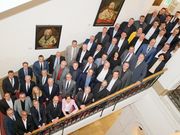
The four-hour State Crafts Conference not only offered a wide range of information and topics, but also gave the approximately 100 participants the opportunity to ask questions and share their own experiences – which they made extensive use of.
by Stefan Buhren, Editor-in-Chief of the German Crafts Journal
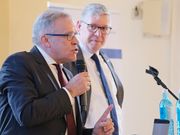
Following the state crafts conference, the top representatives of the crafts sector discussed digitalization, the use of AI in crafts, the energy transition and Europe with the President of the State Parliament Hendrik Hering , the Minister of Economic Affairs Daniela Schmitt , the chairpersons of the various parliamentary groups as well as with other cabinet members and members of parliament in the Rhineland-Palatinate State Parliament.
Kurt Krautscheid, spokesperson for the Rhineland-Palatinate Chambers of Skilled Crafts , explained that artificial intelligence is a key technology for the future of skilled trades and the economy as a whole. Numerous new opportunities will arise in various areas – such as customer management, risk and error analysis, and inventory management. However, many challenges remain before the widespread use of AI in skilled trades can even be achieved.
Kurt Krautscheid sees the following three points in particular:
Broadband expansion – especially in rural areas,
Expand employees’ know-how in the field of AI application through educational offerings and
Provide more support to companies in implementing digital processes.
Johannes Lauer, Chairman of the Rhineland-Palatinate Association of Skilled Crafts, explained on the topic of "Skilled Crafts Implementing the Energy Transition," noting that diverse collaborations have already emerged between individual trades within the so-called climate-focused crafts. These collaborations are being expanded and implemented in practice by businesses. He called for political support through faster permitting processes and less bureaucracy in establishing renewable energy systems, as well as further strengthening of the dual vocational training and continuing education structures within the skilled crafts sector. Johannes Lauer is convinced that the energy transition can only succeed sustainably and with strong consumer protection if this is done.
With a clear commitment to Europe, Gerd Benzmüller , Chairman of the Rhineland-Palatinate State Association of District Craftsmen's Guilds, emphasized that voting is more important than ever in this European election year. He viewed the EU single market, with its diverse opportunities, as a great chance for the skilled trades – especially in border regions. But Benzmüller also explicitly called for EU support for the skilled trades over the next five years in key areas such as attracting skilled workers, digitalization, and sustainability.
During his moderation of the event, Andreas Unger, Managing Director of the Rhineland-Palatinate Crafts Association , made it clear that the joint appearance of the crafts sector under the motto "Crafts RLP", the pooling of resources and thinking within a common broader framework in times of multiple crises is exactly the right way to represent the interests of the crafts sector constructively and with the necessary force to politics and society.
In his closing remarks, Jörg Dittrich, President of the German Confederation of Skilled Crafts, summarized , among other things, that "the numerous challenges such as global crises, high energy prices, skilled labor shortages, excessive bureaucracy, and many other issues must be addressed by policymakers so that the skilled trades can refocus on their core activities. Because: The skilled trades are determined to 'get things done'! Policymakers must create the necessary supportive framework!"
Source: Entrepreneurs' Association of Crafts Rhineland-Palatinate




Write a comment